
Pools
Dreamy wooden terrace – How to choose the right wood
23
Sep
Sep
Have you always dreamed of having your own wooden terrace that would beautify the view of your beautiful home and warmly welcome you when you return home tired after a long day? On the terrace, you could relax at any time, calm your mind, and have pleasant conversations with family and friends. Wonderful, isn’t it?
If you have already decided to take this step and are now thinking about how to implement the project, we have prepared some tips for you that will certainly be helpful – both in choosing the wood and in the implementation and subsequent maintenance.
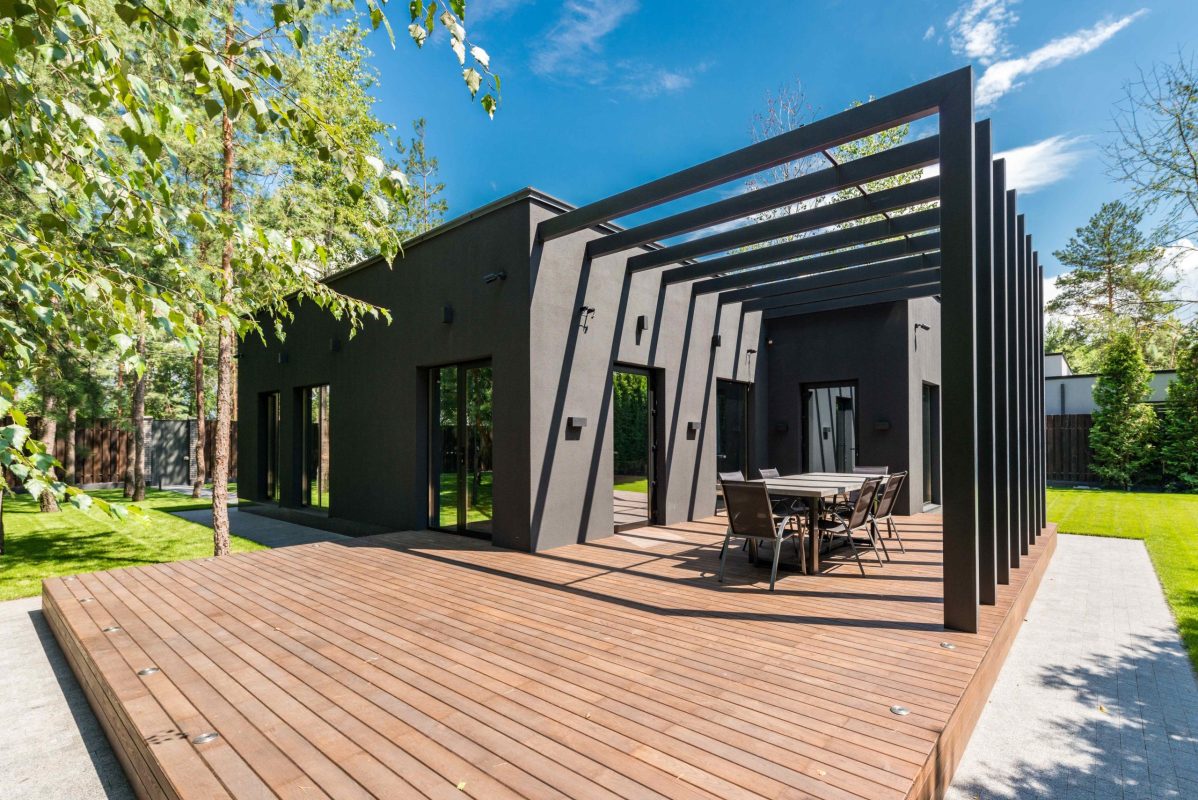
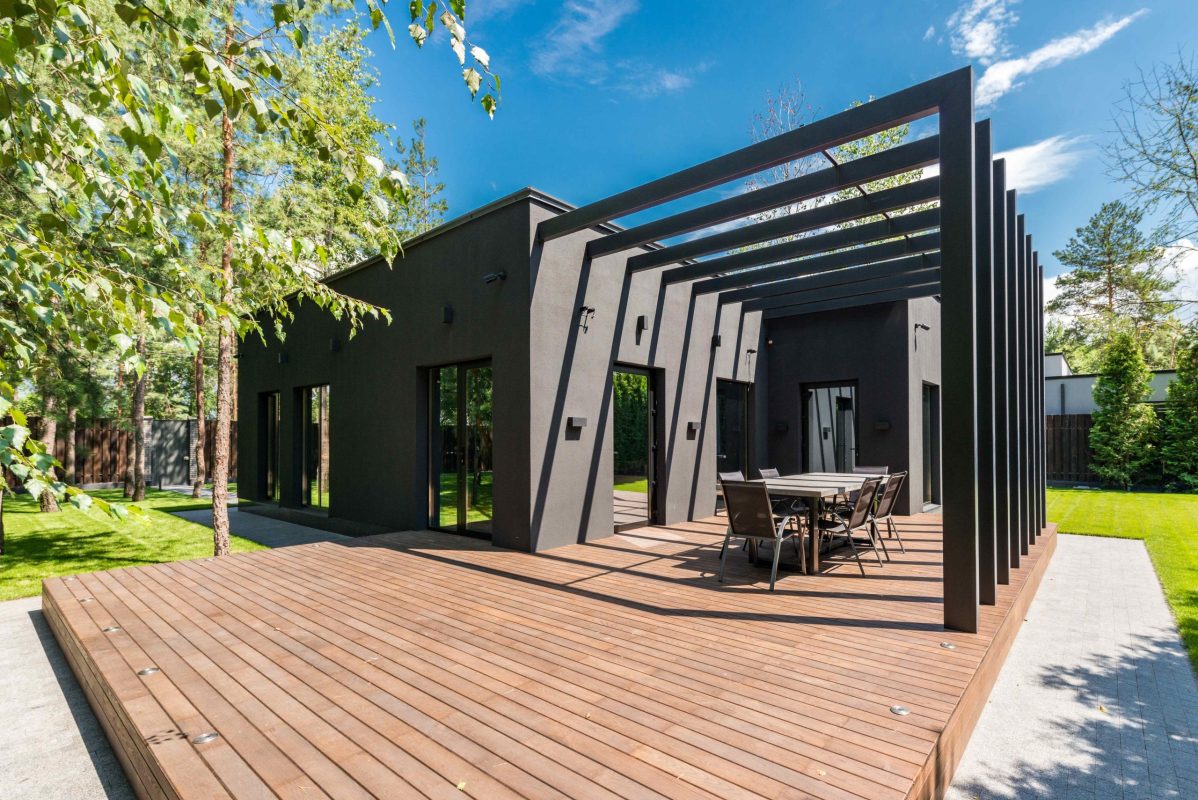
The terrace is an extension of the home, a space where you will create unforgettable memories with your family and friends. Therefore, it is important to choose a wood that not only meets your needs but also brings warmth and pleasant feelings to your home.
Choosing the right wood for your terrace is not only a practical decision but also has a significant visual effect. It is important to ask yourself how you will feel when looking at it? Will you enjoy spending social hours with your loved ones on it? These are certainly important questions that you can already answer. You can view some examples of wooden terraces by clicking HERE.
Are you wondering which type of wood will be most suitable for your terrace? Usually, an expert’s approach is needed for an appropriate choice, as they will, with their rich experience, most easily assess the situation and, together with you, create a plan for which choice would be best for your home.
Choosing the Appropriate Type of Wood
Several different types of wood are suitable for laying terraces:
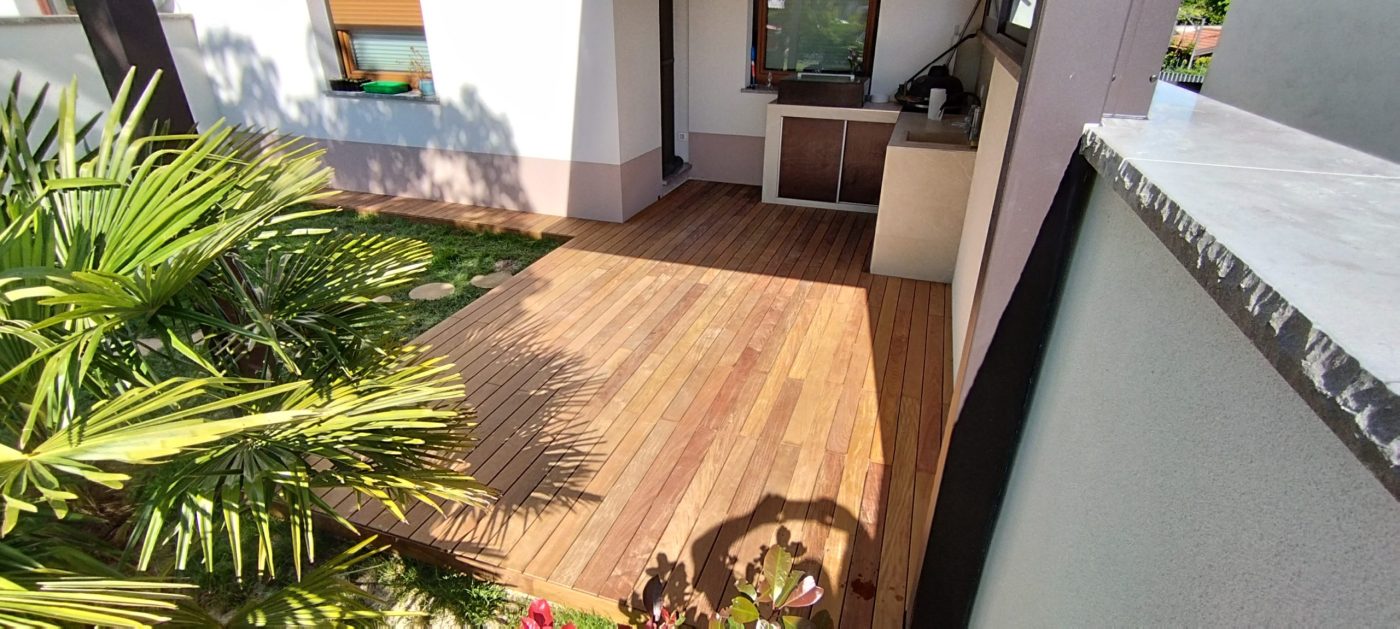
- Ipe Lapacho: This wood is known for its elegance and durability. It is dark olive brown, often appearing with attractive light or dark stripes. Ipe is a very high-quality wood that does not require additional protection. It remains beautiful even after many years of use. It offers an excellent quality-to-price ratio.
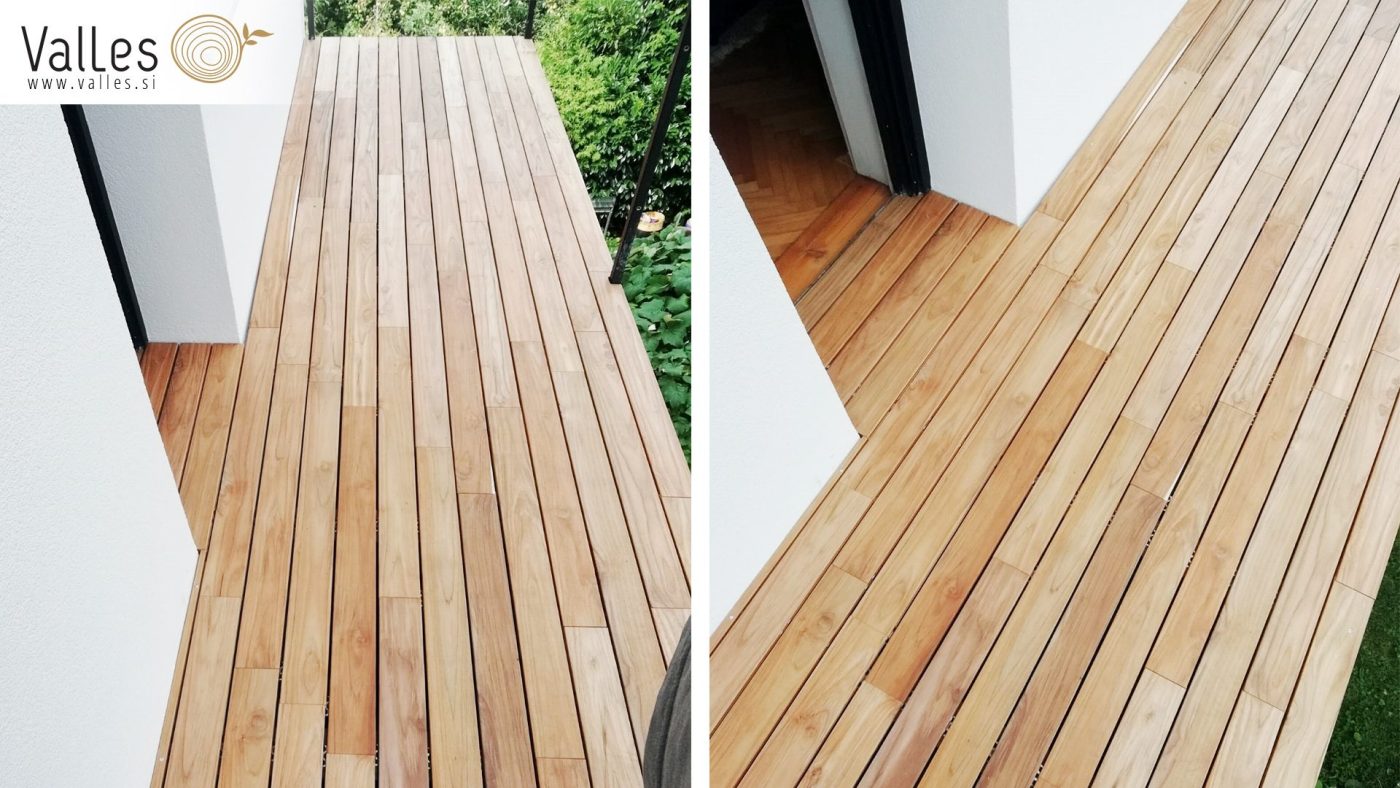
- Teak: Its natural resistance to water and pests means your terrace will look beautiful without much maintenance. This extremely high-quality wood guarantees long-term user satisfaction. It withstands even rough weather changes, seawater, and intense sunlight. Teak wood is warm and pleasant to the touch, ideal for walking barefoot. Like Ipe Lapacho, it does not require additional protection.
- Thermo Teak: Unlike regular teak, this wood is thermally treated at high temperatures using a patented process. This provides it with additional resistance, and its color is somewhat darker.
- Cumaru: Brings an exotic touch to your home. It is a very hard and durable wood of Brazilian origin. It has several peculiarities – it is difficult to ignite, has a distinctive wood structure and color. Its durability and affordability allow you to create a beautiful outdoor or indoor space that will impress all your visitors.
- Masaranduba: Its reddish color adds a touch of luxury to your terrace. It has a fine, even structure but is less stable. It needs to be provided with proper ventilation and fastening. Masaranduba is a medium-quality wood for exterior cladding.
- Itauba: This is durable wood with a really long lifespan and is resistant to various organisms. It is most commonly used for wooden terraces and facades.
You can read more about the types of wood HERE.
Given the quality-to-price ratio for sunny and southern locations, we recommend IPE wood for its stability and resistance to weather conditions.
Maintenance
With proper maintenance, you will preserve the beauty and functionality of your wooden terrace. Valles recommends regular cleaning and restoration with protective coatings to extend the terrace’s lifespan.
Restoration of Wooden Terraces
It is true that wooden terraces require minimal maintenance, but occasional cleaning and applying a protective coating are sometimes not enough, and professional restoration is needed.
Are you wondering why restoration? Because it will further extend the terrace’s lifespan and restore its natural beauty. Restoration will improve the appearance of the entire outdoor space. Additionally, it is a sustainable investment, as restoration is more financially friendly than a complete terrace replacement.
When is Terrace Restoration Necessary?
A short answer would be that it depends on the type of wood and the location of your terrace. If it is located on the south side and exposed to all weather conditions, then oiling is recommended once a year (in the spring). If the terrace is covered, then once every 2-3 years. However, the best answer to this will be given by an expert who deals with the laying and restoration of wooden terraces.
How to Start and Which Provider to Choose?
Are you ready to realize your project?
Valles has prepared a SPECIAL PROMOTIONAL OFFER for you.
If you are not sure how to start, Valles will be happy to help and professionally collaborate while considering your ideas. You can visit them in their showrooms in Sežana and Ljubljana (Škofljica).
Your dream terrace is just a step away!
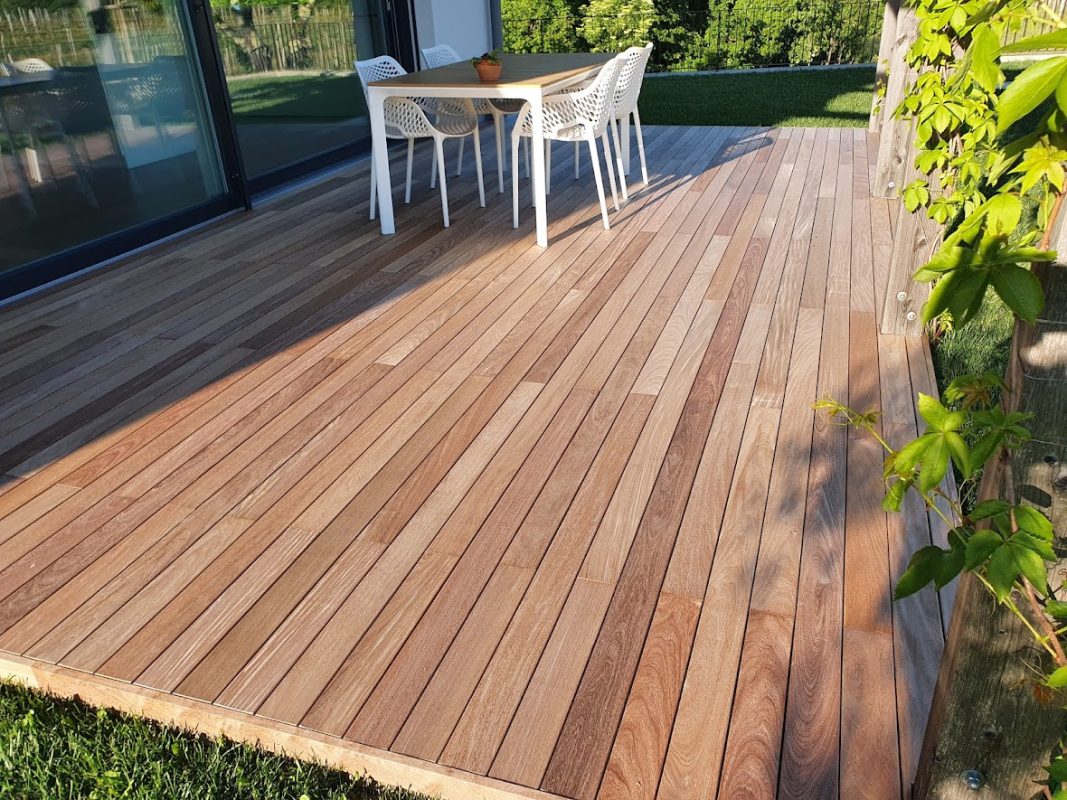
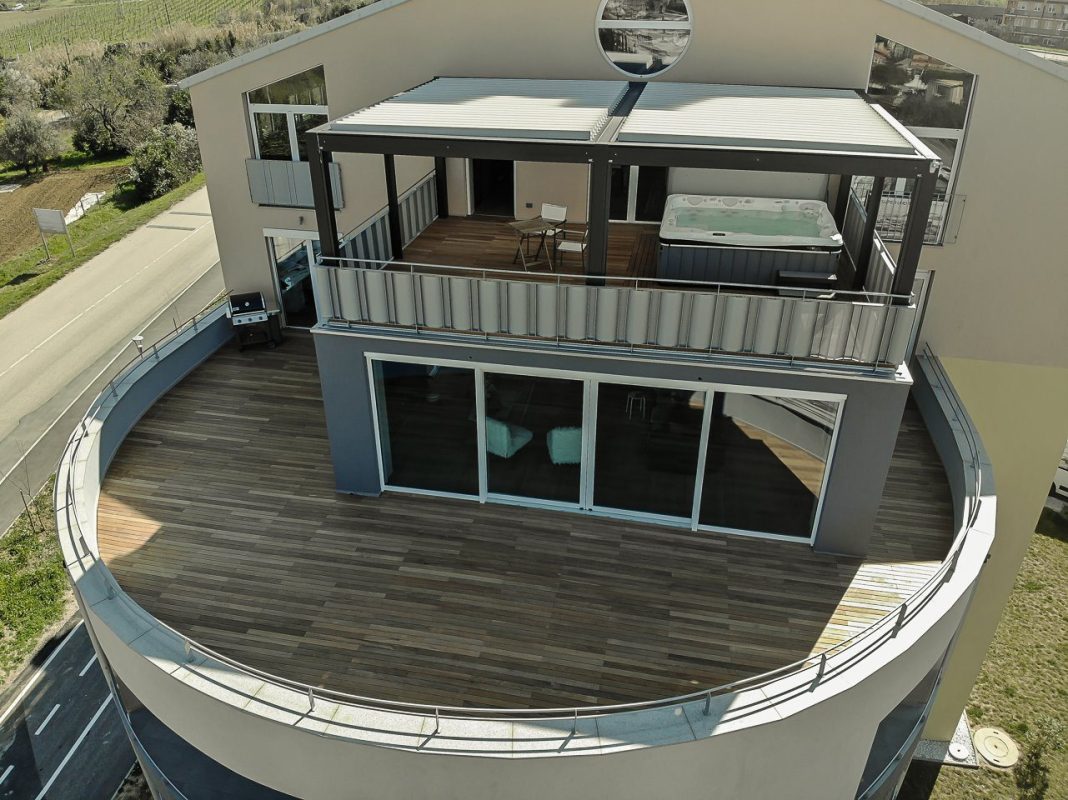
A wooden terrace also provides an ideal base for your hot tub, which you can choose from our online store JJSPA.